This Is What Happens When Art Meets the Amalfi Coast
You know that feeling when a place doesn’t just take your breath away—but speaks to your soul? That’s the Amalfi Coast. Beyond the postcard-perfect cliffs and turquoise waters, I discovered a world where every cobblestone, church fresco, and local craft tells a story. This isn’t just a vacation—it’s a living gallery of centuries-old art and culture. Let me take you where the real magic hides.
First Glimpse: When the Coastline Becomes a Canvas
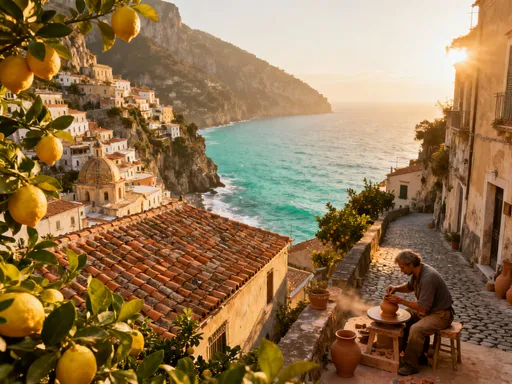
The journey along the winding coastal road from Sorrento to Vietri sul Mare is not merely a commute—it is the overture to an artistic revelation. As the Tyrrhenian Sea unfurls below, its waters shifting from sapphire to emerald with the light, the Amalfi Coast reveals itself as nature’s own masterpiece. The cliffs rise like stage sets, terraced with vineyards and lemon groves whose fruit perfumes the breeze. Each village—Positano, Amalfi, Maiori—appears as if painted into place, its pastel buildings stacked vertically like pigments layered on canvas. This is not scenery to be passively admired; it is an immersive experience that shapes the region’s identity.
What makes this landscape so profoundly artistic is not just its beauty, but the harmony between human intervention and natural form. The way Positano curves into the hillside, with staircases spiraling like brushstrokes, reflects a centuries-old dialogue between architecture and terrain. At sunrise, when golden light spills over the dome of Santa Maria Assunta, or at dusk, as shadows stretch across the sea like charcoal smudges, the coast transforms into a living study of light and shadow. Unlike museum pieces behind glass, this art is unframed, ever-changing, and deeply participatory.
For travelers, this means the journey itself is part of the cultural encounter. The narrow road, clinging precariously to the edge of the cliff, forces slowness—a deliberate pace that invites observation. There are no straight lines here, no rigid grids. Instead, the curves of the road mirror the organic forms of the land, echoing the region’s artistic philosophy: beauty emerges not from control, but from adaptation. To travel this coast is to understand that art is not only made by hands, but shaped by geography, climate, and time.
Amalfi’s Cathedral: Where History, Faith, and Art Collide
At the heart of the town of Amalfi, rising from the bustling piazza like a monument to layered time, stands the Duomo di Sant’Andrea. Its grand staircase, a dramatic sweep of Baroque design, draws visitors upward not just physically, but spiritually and historically. This cathedral is not a single work of art, but a palimpsest of civilizations—Norman, Arab, Byzantine, and Romanesque—each leaving its mark in stone, mosaic, and ornamentation. The striped arches of the façade, the Arabic-influenced cloisters, and the golden mosaics inside speak of a port city that once traded not only goods, but ideas.
Inside the cathedral, the atmosphere shifts. The air is cooler, hushed, reverent. The ceiling of the nave glows with 12th-century mosaics depicting scenes from the life of Christ, their gold leaf catching the dim light like embers. These are not merely religious images; they are masterpieces of medieval craftsmanship, created by artisans who blended theological narrative with aesthetic precision. The crypt below, dedicated to Saint Andrew whose relics are said to rest here, is even more evocative. Lit by candlelight, its ancient columns and vaulted ceilings whisper of centuries of pilgrimage, prayer, and artistic devotion.
What makes the Duomo so powerful is its continuity. While many historic churches have been preserved as relics, this one remains fully alive—hosting daily Mass, community celebrations, and seasonal festivals. The art is not frozen in time; it is part of an ongoing spiritual and cultural rhythm. Visitors are not just observers but temporary participants in a tradition that has shaped Amalfi’s identity for over a thousand years. To stand within its walls is to feel the weight and warmth of history, where faith and beauty are inseparable.
Positano’s Hidden Ateliers: Meet the Makers
Beyond the postcard-perfect façades and bustling boutiques of Positano lies a quieter, more intimate world—the workshops of local artisans who continue centuries-old traditions. Tucked into narrow alleyways or perched above quiet courtyards, these ateliers are sanctuaries of craftsmanship. Here, the clink of pottery wheels, the hum of looms, and the scent of wet clay signal a different kind of tourism—one rooted in creation rather than consumption. These are not souvenir factories, but living studios where art is made by hand, with intention and pride.
One such workshop belongs to Maria, a third-generation ceramicist whose family has worked with clay since the 1800s. Her studio, a sunlit room overlooking the sea, is filled with pieces painted in the traditional Amalfitan style—vivid blues, sunburst yellows, and deep greens inspired by the surrounding landscape. She explains that her glazes are made from local materials, including volcanic ash from Mount Vesuvius, linking her work directly to the region’s geology. “The earth gives us the color,” she says, “and we give it form.” Each plate, bowl, and vase is unique, bearing the subtle imperfections that mark it as handmade.
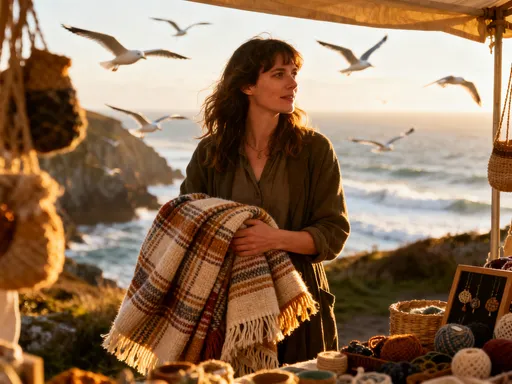
Elsewhere, linen weavers work on wooden looms passed down through generations, producing tablecloths and napkins embroidered with floral motifs reminiscent of Mediterranean gardens. These textiles are not merely decorative; they are functional art, designed to be used and cherished. The artisans I spoke with do not see themselves as preserving the past out of nostalgia, but as contributing to a living culture. Their work is not about replication, but continuity—adapting traditional techniques to contemporary tastes without losing authenticity.
For visitors, seeking out these off-the-beaten-path studios offers a rare opportunity: to witness art in progress, to speak with the makers, and to take home something that carries the soul of the place. It is a form of tourism that honors both the craft and the craftspeople, transforming a simple purchase into a meaningful connection.
Ravello’s Music and Gardens: The Soundtrack of Elegance
Perched high above the coast, suspended between sky and sea, the village of Ravello has long been a sanctuary for artists, writers, and musicians. Its cool breezes, panoramic views, and air of refined tranquility have drawn creative minds for centuries—from composer Richard Wagner, who found inspiration here for parts of *Parsifal*, to modern-day performers who grace its summer stages. Ravello is not just picturesque; it is a cultural haven where music, architecture, and nature converge into a single, harmonious experience.
At the heart of this artistic legacy is the Ravello Festival, an annual celebration of classical music, dance, and opera that transforms the town’s historic villas into open-air performance spaces. In the gardens of Villa Rufolo, where Wagner once strolled, audiences gather at dusk to listen to orchestras play beneath starlit skies. The acoustics are extraordinary—the sound carries over fountains, across terraces, and out toward the infinite horizon. The backdrop is not a painted set, but a living one: bougainvillea spilling over stone walls, citrus trees heavy with fruit, and the sea shimmering in the distance.
Villa Cimbrone, another jewel of Ravello, offers a different kind of artistic immersion. Its Terrace of Infinity, a colonnaded balcony that seems to float above the clouds, is one of the most photographed spots on the coast. But more than a view, it is a designed experience—an architectural meditation on perspective, balance, and beauty. The gardens themselves are a form of living art, with symmetrical layouts, sculpted hedges, and hidden alcoves that invite quiet contemplation. Statues of gods and muses stand among the flowers, not as relics, but as companions to the present moment.
What makes Ravello unique is its ability to blend grandeur with intimacy. Concerts may feature world-renowned musicians, but the setting remains personal, almost private. There are no massive arenas or amplified speakers—just music, nature, and a small, attentive audience. To attend a performance here is to understand that art is not only heard or seen, but felt in the body, shaped by the environment in which it is experienced.
Local Craft as Cultural Survival
In an age of mass production and globalized tourism, the persistence of traditional crafts on the Amalfi Coast is nothing short of remarkable. These are not quaint performances for visitors, but vital practices that sustain cultural identity. From the paper mills of Amalfi to the boatyards of Positano, skilled artisans continue to work with methods that have changed little over centuries. Their work is not just about making objects; it is about preserving knowledge, community, and a way of life.
Take, for example, the historic papermaking tradition of Amalfi. Since the 13th century, the town has been renowned for its high-quality cotton paper, produced using techniques adapted from the Arab world. The process begins with rags, which are soaked, beaten, and pressed into sheets using wooden molds and animal glue. The result is a soft, durable paper once used for papal bulls and maritime records. Today, only a few mills continue the practice, but they do so with deep reverence. One craftsman explained that each sheet carries the rhythm of the artisan’s hands—the slight variations in thickness, the texture of the fibers—all evidence of human touch in an increasingly automated world.
Similarly, the construction of the traditional wooden fishing boat, the *gozzo*, remains a handcrafted art. Built in small shipyards using cypress and walnut wood, these boats are shaped without blueprints, guided instead by the builder’s eye and experience. Each curve of the hull, each hand-carved oar, reflects generations of maritime knowledge. While few are used for fishing today, many are maintained for cultural festivals or private use, ensuring the skills are not lost.
What unites these crafts is a quiet resilience. The artisans I met do not seek fame or fortune; they work because they believe in the value of what they do. They are not resisting change, but choosing to carry forward what matters. In doing so, they offer travelers a rare gift: the chance to witness authenticity in action, and to support it with mindful choices.
Art Beyond Monuments: Street Life as Performance
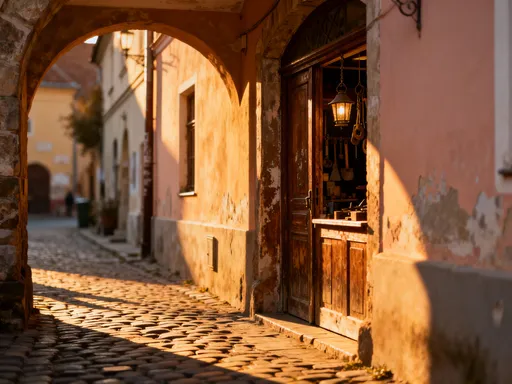
While cathedrals, villas, and festivals capture much of the attention, some of the most compelling art on the Amalfi Coast exists in the unscripted moments of daily life. In the early morning, as fishermen haul in their nets along the docks of Maiori, the rhythmic pull of rope and the glint of silver fish create a scene of quiet choreography. On narrow streets, elderly women lean from their balconies, calling out to neighbors in voices that rise and fall like melody. A street vendor in Amalfi sells lemon granita in hand-painted cups, each one a tiny canvas of color and pattern.
This is the aesthetic of authenticity—the beauty that emerges not from design, but from lived experience. There are no tickets required, no opening hours. It is free, spontaneous, and deeply human. A baker dusts flour onto dough with the precision of a painter. A gardener prunes a jasmine vine with the care of a sculptor. Even the way locals navigate the steep, winding streets—balancing shopping bags, strollers, and conversation—feels like a practiced dance.
For the observant traveler, these moments are as valuable as any museum visit. They reveal a culture that does not perform for outsiders, but simply exists on its own terms. Children play hopscotch on cobblestones etched with centuries of footprints. A man tunes his guitar on a doorstep, the notes drifting into the evening air. These are not tourist attractions; they are the rhythms of community, where art is not something separate from life, but woven into its fabric.
Photographers often seek the “perfect shot,” but the true artistry lies in presence—being still enough to notice, to listen, to feel. When you allow yourself to move at the pace of the place, you begin to see that the Amalfi Coast is not just a destination, but a state of mind—one that values slowness, craftsmanship, and connection.
How to Travel This Region with Cultural Respect
As the Amalfi Coast grows in popularity, the challenge of preserving its cultural and environmental integrity becomes more urgent. Overtourism threatens not only the landscape but the very traditions that make the region special. Crowds can overwhelm narrow streets, strain infrastructure, and reduce authentic experiences to photo ops. Yet, with thoughtful choices, travelers can support sustainability while deepening their own connection to the place.
One of the most impactful decisions is timing. Visiting in the shoulder seasons—April to early June, or September to October—means fewer crowds, milder weather, and a greater chance to engage with locals. During these months, festivals are still in full swing, restaurants are open, and the light is just as magical, but the pressure on the environment and communities is significantly reduced. It is also easier to secure reservations at family-run osterias, where meals are made with local ingredients and served with genuine warmth.
Supporting local artisans is another way to travel mindfully. Instead of buying mass-produced souvenirs, seek out independent workshops, craft markets, or cooperatives. A hand-thrown ceramic bowl, a piece of linen woven on a historic loom, or a sheet of Amalfi paper makes not only a meaningful keepsake but a direct contribution to cultural preservation. When possible, take a class—learn to paint a tile, make pasta, or weave a simple pattern. These experiences create lasting memories and foster deeper appreciation.
Choosing the right guides matters, too. Opt for tours led by local historians, artists, or longtime residents rather than generic operators. Their insights go beyond dates and facts; they offer stories, context, and personal connections that bring the culture to life. Walking tours that focus on architecture, craft, or daily life—not just photo stops—allow for a richer, more respectful engagement.
Finally, practice presence. Put the phone down. Sit in a piazza with a coffee and watch the world go by. Say “grazie” with sincerity. Respect quiet zones, historic sites, and private spaces. Traveling with cultural respect is not about perfection, but intention. It is about recognizing that you are a guest in a living community, not a consumer of a product.
Conclusion
The Amalfi Coast isn’t just a destination—it’s a dialogue between past and present, nature and craft, silence and song. To visit with curiosity and care is to become part of its ongoing story. Every stone, every note, every brushstroke carries the weight of history and the spark of creativity. This is not a place to rush through, but to linger in, to listen to, to learn from.
The art of the Amalfi Coast does not reside only in its monuments, but in the hands of those who shape its future—the potter, the weaver, the gardener, the musician. It lives in the way light falls on a cliff at dusk, in the laughter from a balcony, in the quiet pride of a craftsperson showing their work. To experience it fully is to slow down, to look closely, and to travel not just with your eyes, but with your heart.
Let the art move you. Then, let it change how you see the world.