You Won’t Believe What I Found Along the Ganges at Dawn
There’s something magical about Varanasi at first light—when the fog hugs the river and the city stirs to life. I came looking for spiritual vibes, but what I discovered was pure natural beauty: quiet ghats, golden sunrises, and the gentle rhythm of the Ganges flowing like time itself. This isn’t just a holy city; it’s a landscape alive with wonder. If you’ve ever doubted nature could thrive in chaos, come see this. The morning air carries whispers of devotion, but also the crisp scent of dew on stone and the soft ripple of water against ancient steps. In those early hours, before the crowds arrive, the Ganges reveals a side few expect—a serene, breathing ecosystem where light, water, and life move in quiet harmony. It is not only faith that flows here, but also the undeniable pulse of the natural world.
The First Glimpse: Arriving in Varanasi Before Sunrise
Stepping into Varanasi in the predawn darkness feels like entering a dream suspended between time and tradition. The streets are nearly empty, save for the occasional rickshaw gliding silently over wet cobblestones, and the distant echo of temple bells drifting through the cool air. As I made my way toward the riverbank, the city was still wrapped in a deep, contemplative hush. There were no crowds, no vendors calling out, no rush—only the soft murmur of life beginning to awaken. The scent of sandalwood lingered faintly, mixed with the earthy aroma of the river, and somewhere in the distance, a low chant rose like a breath from the earth itself.
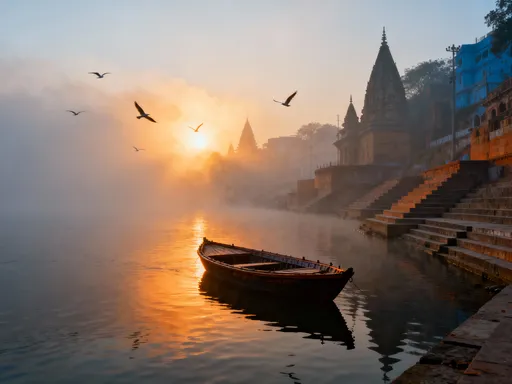
What struck me most was not the expected spectacle of spirituality, but the quiet presence of nature reclaiming the space. The Ganges, visible now as a silver ribbon beneath the dim glow of lanterns, moved with a calmness that contrasted sharply with its reputation. I had come expecting chaos—boats jostling, pilgrims thronging, rituals unfolding in every direction. Instead, I found stillness. The fog curled gently off the water’s surface, wrapping the ghats in a delicate veil. A few boatmen were already at work, untethering their wooden shikaras and checking oars, their movements slow and practiced. There was no urgency, only preparation—a rhythm as old as the river itself.
My expectations, shaped by photographs and stories, were instantly recalibrated. This was not a city performing for visitors; it was a place living in its most authentic moment. The interplay of light and shadow, the quiet sounds of water lapping against stone, and the way the first pale glow began to bleed into the eastern sky—all of it spoke of a deeper reality beneath the surface of tourism. Nature here was not an accessory to the spiritual experience; it was central to it. The Ganges wasn’t just a backdrop for rituals. It was a living entity, and in those early hours, it felt more alive than ever.
The Ganges at Dawn: A River That Feels Alive
As the sky began to lighten, the Ganges transformed before my eyes. The water, once a dark, reflective surface, took on a luminous quality, shifting from deep indigo to soft amber as the first rays of sunlight touched its flow. The river didn’t just reflect the dawn—it seemed to generate its own light, rippling with a golden sheen that danced across the waves. There was a fluidity to it, a sense that the water was not merely moving but breathing. Each current carried with it the memory of distant mountains, the snowmelt from the Himalayas still whispering through its veins.
What surprised me most was how clearly the natural cycles were visible even in this urban stretch of the river. The Ganges is often spoken of in spiritual terms—as a goddess, as a purifier, as a lifeline. But in those quiet morning hours, it was easy to see it also as an ecosystem. Birds were already active: kingfishers darted low over the water, their blue flashes brilliant against the soft light, while cormorants perched on half-submerged stones, wings outstretched to dry. Along the banks, clusters of reeds swayed gently in the breeze, and in sheltered corners, lotus leaves floated like green saucers on the surface, their pink buds just beginning to open.
The seasonal rhythm was evident, too. It was early spring, and the river level was lower than during the monsoon months, exposing more of the ancient stone steps and revealing layers of sediment that told stories of past floods. The color of the water varied from clear amber near the center to a murkier brown along the edges, where runoff from the city met the flow. Yet even in those places, life persisted. Frogs croaked softly from hidden crevices, and small fish darted through the shallows, feeding on insects drawn to the dawn. The Ganges, for all its challenges, was not lifeless. It was adapting, enduring, continuing its journey with quiet resilience.
Hidden Ghats: Where Nature Meets Stillness
Away from the well-known Dashashwamedh Ghat, where crowds gather for the evening aarti, lie quieter, lesser-visited ghats that offer a different kind of experience. These hidden steps, tucked between narrow alleys and overgrown shrines, are where the river feels most intimate. I wandered to one called Panchganga Ghat in the early morning, drawn by its relative solitude. Unlike the bustling main ghats, this one was nearly empty—just a few elderly men seated on the stones, wrapped in shawls, watching the water in silence.
The textures here were mesmerizing. Centuries of water, foot traffic, and weather had worn the sandstone steps into smooth, undulating curves. Moss clung to the shaded corners, its velvety green contrasting with the warm ochre of the stone. Water patterns—etched by years of rising and falling tides—created natural bas-reliefs on the surfaces, like ancient scripts written by the river itself. In places, the current swirled in slow eddies, catching leaves and petals in delicate spirals before carrying them downstream. It was easy to lose track of time here, lulled by the quiet rhythm of water meeting stone.
What made these hidden ghats so powerful was the sense of connection they offered—not just to history, but to the natural world. There were no loudspeakers, no crowds, no commercial distractions. Just the sound of breathing, the occasional dip of a hand into the water, and the soft clink of a metal pot as someone filled it for morning rituals. In this stillness, nature wasn’t something separate to be observed from a distance. It was present in every detail—the way the light caught the dew on a spiderweb, the rustle of a lizard slipping between cracks, the faint scent of wet earth rising with the warmth of the day. These quiet ghats reminded me that even in one of the world’s most visited spiritual cities, there are pockets of untouched serenity where nature and stillness coexist.
Sunrise from the Water: A View That Changes Everything
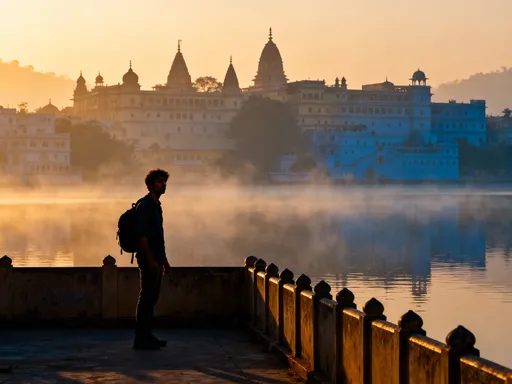
To truly understand the Ganges at dawn, one must see it from the river itself. I boarded a small wooden boat just before sunrise, guided by a local boatman named Raju, whose family has lived along the river for generations. As we pushed off from the ghat, the city began to glow in the soft morning light. The towering temples and palaces lining the banks, usually seen from ground level, now framed the horizon like silhouettes in a painting. From the water, the perspective shifted entirely. The ghats, which from above look like crowded staircases, revealed their full architectural grace—each step a part of a living tapestry woven into the river’s edge.
Then came the sunrise. It began as a faint blush in the east, a delicate wash of pink spreading across the sky. Within minutes, the colors intensified—streaks of orange, gold, and coral ignited the clouds, reflecting off the water in shimmering ribbons. The light didn’t just fall on the river; it danced across it, transforming the surface into a molten mirror. As we drifted gently downstream, the sun rose fully, casting long shadows from the temple spires and illuminating the faces of those already at prayer. The warmth on my skin, the gentle rocking of the boat, the silence broken only by the dip of the oars—everything felt sacred, not because of doctrine, but because of presence.
Experiencing the sunrise from the water created a profound sense of intimacy with the landscape. From this vantage point, the Ganges wasn’t just a river—it was a corridor of light and life. I could see how the natural and the human were intertwined: laundry drying on lines above the ghats, children waving from upper balconies, priests lighting incense in open-air shrines. Yet none of it felt intrusive. Instead, it felt harmonious, as if daily life had grown up alongside the river, shaped by its rhythms. Being on the water allowed me to witness not just the beauty of the moment, but the deeper truth of coexistence—between people and nature, between tradition and time.
The Green Life Along the Banks: More Than You’d Expect
One of the most surprising aspects of the Ganges in Varanasi is the resilience of green life along its banks. In a city of dense population and constant activity, it would be easy to assume that nature had been pushed aside. Yet, even in the most urban stretches, vegetation persists with quiet determination. Banyan and peepal trees, some centuries old, stretch their gnarled roots into the river’s edge, their canopies providing shade for morning meditators and resting pilgrims. Their leaves, broad and waxy, catch the sunlight and rustle softly in the breeze, creating pockets of coolness in the rising heat.
Smaller plants thrive too. Creepers climb temple walls, their tendrils weaving through ancient carvings. Patches of wild mint and basil grow in cracks between stones, releasing their scent when brushed by passing feet. In some areas, community gardens have been established on reclaimed land, where locals grow vegetables and flowers using river water for irrigation. These small plots, though modest, are testaments to the enduring relationship between people and the land. Even in a sacred space defined by ritual, practicality and nature find a way to coexist.
What’s most remarkable is how integrated this green life is with daily routines. Women wash clothes on the steps, their movements rhythmic, while children play nearby, chasing each other through patches of grass. Pilgrims bathe in the river, not just for spiritual cleansing but as part of a daily hygiene practice. The Ganges serves multiple roles at once: a place of worship, a source of water, a communal space, and an ecological corridor. Despite pollution challenges and urban pressure, the river continues to support life in ways that are both visible and subtle. Birds nest in riverside trees, insects pollinate riverbank flowers, and microorganisms in the water contribute to natural filtration. It’s a reminder that even in the most human-dominated environments, nature finds a way to persist.
When Nature and Culture Flow Together
The landscape of the Ganges in Varanasi is not purely natural, nor is it entirely man-made. It is a fusion—a centuries-long dialogue between human tradition and the natural world. The ghats themselves are a perfect example: built from stone, shaped by ritual, yet constantly reshaped by the river’s flow. High water marks on their walls tell stories of monsoon floods, while inscriptions worn smooth by time speak of devotion passed down through generations. This interplay is not always easy—there is tension between the needs of the city and the health of the river—but there are also moments of balance, even harmony.
I observed several sustainable practices during my visit. At some ghats, filtration systems have been introduced to reduce the amount of untreated water entering the river. Local initiatives encourage the use of biodegradable offerings—flowers instead of plastic, clay lamps instead of polystyrene. Volunteers can be seen early in the morning collecting floating debris, working quietly to preserve the river’s integrity. These efforts, though small in scale, reflect a growing awareness that the Ganges is not just a symbol, but a living system that requires care.
At the same time, cultural practices continue to honor the river’s natural cycles. The timing of rituals often follows the rhythm of the tides and seasons. Morning prayers coincide with sunrise, when the air is purest and the mind most alert. Festivals like Chhath Puja involve offerings made directly to the sun and water, reinforcing the connection between nature and divinity. Even the act of cremation on the riverbank, while solemn, is seen as a return to the elements—a final merging with fire, air, and water. These traditions, far from being separate from ecology, are deeply rooted in it. They reflect an understanding that human life is not above nature, but part of its flow.
Why This Journey Changed My View of Sacred Landscapes
Before this journey, I thought of sacred places as sites of human devotion—temples, shrines, pilgrimage routes built by faith. But Varanasi taught me that true sacredness often lies not in what we build, but in what we allow to simply be. Here, spirituality is not separate from nature; it is expressed through it. The Ganges is not just a river people worship—it is the very embodiment of the sacred, flowing through every aspect of life. To see it at dawn, to feel its rhythm, to witness the quiet resilience of life along its banks, is to understand that holiness can be found in the ordinary, in the natural, in the everyday.
This experience shifted something deep within me. I realized how often we rush through travel, chasing landmarks, ticking boxes, seeking the perfect photo. But in Varanasi, the most profound moments came not from doing, but from being. Sitting on a quiet ghat, watching the water move, listening to the soft sounds of the waking city—I felt a sense of connection I hadn’t known I was missing. It wasn’t about belief or doctrine. It was about presence. The river, with its constant flow, reminded me of impermanence, of the beauty in letting go, of the peace that comes from simply observing without needing to change anything.
And perhaps that is the greatest lesson the Ganges offers. In a world that often feels fragmented—between nature and culture, between the sacred and the mundane—this river shows us that they can coexist. It carries both prayers and petals, pollution and purity, history and hope. It does not reject the human world, nor does it surrender to it. Instead, it flows, adapts, endures. To travel here is not just to visit a destination, but to witness a living philosophy—one that invites us to slow down, to pay attention, to find wonder not in grand gestures, but in the quiet movement of water at dawn.
Varanasi isn’t just one of the world’s oldest cities—it’s a living landscape where nature pulses beneath the surface of ritual and routine. Beyond the temples and ceremonies lies a quieter truth: the Ganges, its light, its rhythm, and its resilience. This is not just a place to visit, but a place to feel. And sometimes, the most profound discoveries aren’t found in answers—but in simply being there, watching the water flow.