Unseen Angles: Where Düsseldorf’s Architecture Steals the Show
Ever wondered how a city can feel both ultramodern and deeply historic at the same time? Düsseldorf does exactly that—its skyline blends steel, glass, and centuries-old charm in ways that’ll make your camera work overtime. I roamed its streets hunting for the most photogenic corners, and what I found went way beyond postcard views. From sleek high-rises reflecting the Rhine to hidden couries frozen in time, this city is a visual storyteller. Let me take you to the spots where architecture doesn’t just stand—it speaks. Whether you’re drawn to the elegance of centuries-old facades or the bold lines of contemporary design, Düsseldorf offers a rare harmony between preservation and innovation. This is a city that remembers its past while confidently shaping its future, and every neighborhood tells a chapter of that story through brick, beam, and glass.
The First Glimpse: Arriving in Düsseldorf and the Immediate Visual Impact
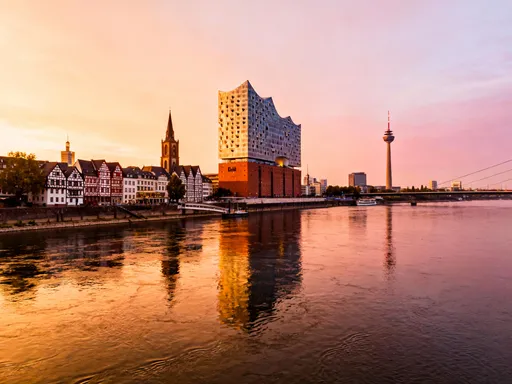
As travelers approach Düsseldorf, whether by train, plane, or car, the city reveals itself in layers. The initial impression is one of balance—between water and structure, old and new, motion and stillness. Standing on the banks of the Rhine, especially near the Oberkassel Bridge, offers one of the most complete visual summaries of Düsseldorf’s architectural identity. To the east, the historic Altstadt rises with its red-tiled roofs and narrow gabled houses, a skyline little changed since the 17th century. To the west, the MedienHafen glistens with sweeping curves of titanium-zinc panels and floor-to-ceiling glass, a testament to 21st-century ambition. This duality is not accidental; it is carefully curated, a result of decades of urban planning that respects heritage while embracing modernity.
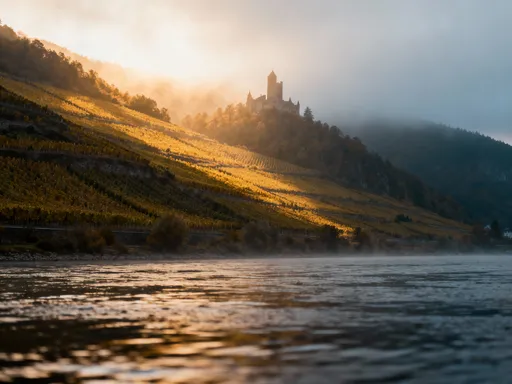
The golden hour—just after sunrise or before sunset—transforms this riverside panorama into a photographer’s dream. The low-angle sunlight bathes the historic buildings in warm amber tones while setting the glass towers ablaze with reflections of fire-orange skies. At these moments, the Rhine itself becomes a mirror, doubling the visual impact and offering symmetrical compositions that are both striking and serene. For those seeking the perfect first shot of the city, positioning along the Rheinuferpromenade between the Rhine Tower and the MedienHafen provides an unobstructed view. A wide-angle lens captures the full sweep, while a telephoto can isolate contrasting details—one frame holding both a centuries-old church spire and a futuristic sail-shaped tower.
Equally compelling is the nighttime view. As dusk settles, the city’s lighting design comes into focus. The Altstadt glows with soft, warm lamps that highlight timber frames and cobblestone textures, while the MedienHafen pulses with cool blue and white LED accents that trace the contours of its avant-garde forms. The contrast is not jarring but harmonious, like two movements in the same symphony. This seamless integration of lighting styles speaks to Düsseldorf’s thoughtful urban vision—one that values atmosphere as much as architecture. For photographers, the takeaway is clear: timing is everything. The same location offers vastly different narratives at different hours, rewarding those who return again and again to witness the city’s many moods.
Altstadt: Where Centuries of Style Collide
Düsseldorf’s Old Town, often referred to as the “longest bar in the world” for its dense concentration of breweries and taverns, is equally remarkable for its architectural continuity. Compact yet rich in detail, the Altstadt preserves a remarkable number of restored 17th- and 18th-century buildings, many of which survived wartime damage through meticulous reconstruction. Walking through its winding lanes feels like stepping into a living museum, where half-timbered houses with steeply pitched roofs stand shoulder to shoulder with Baroque-era townhouses adorned with carved stone reliefs and ornamental gables. The facades are a patchwork of colors—ochre, terracotta, deep green—each building telling a story of craftsmanship and resilience.
Burgplatz, one of the most photographed squares in the city, anchors the Altstadt’s architectural narrative. Here, the Altes Rathaus (Old Town Hall), rebuilt in the 1950s in its original Renaissance style, dominates the square with its red-and-white façade and clock tower. Framed by the Rhine in the background, it becomes a powerful subject, especially when captured with a wide aperture to blur the bustling outdoor cafes in the foreground. Seasonal decorations enhance its charm—during Christmas, a traditional market wraps the square in twinkling lights and wooden stalls, adding layers of texture and warmth to images. In spring, blooming flowers in window boxes and planters introduce soft color contrasts against the historic masonry.
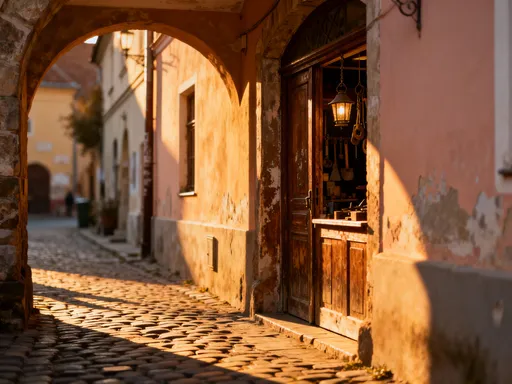
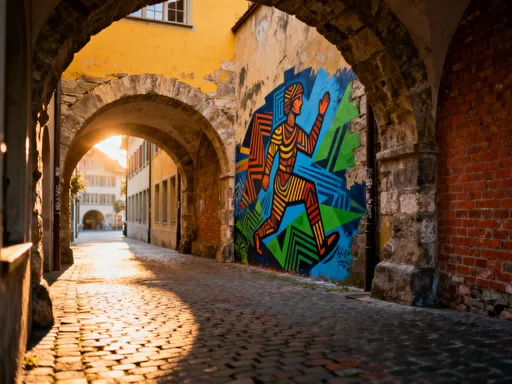
Equally compelling is Marktplatz, home to the reconstructed Stadtmuseum and surrounded by colorful guild houses that once belonged to artisans and merchants. These buildings feature intricate carvings, decorative shutters, and iron lanterns—elements that invite close-up photography. A macro lens can reveal the texture of weathered wood, the patina on metal hinges, or the delicate tracery of wrought-iron balconies. For storytelling compositions, photographers can use doorways and alleyways as natural frames, guiding the viewer’s eye into the depth of the scene. The interplay of light and shadow in these narrow passages creates dramatic contrasts, especially in the late afternoon when sunlight slants across the cobblestones.
What makes the Altstadt so visually rich is not just its preservation but its vitality. These buildings are not museum pieces—they house restaurants, boutiques, and homes, their architecture animated by daily life. The clink of beer glasses, the scent of roasted almonds, the laughter from open windows—all contribute to the atmosphere that elevates architectural photography from documentation to narrative. To capture this essence, photographers are encouraged to slow down, observe, and wait for moments when human presence complements the built environment: a vendor arranging flowers, a couple pausing beneath an arched gateway, or a child peering from a half-timbered window.
MedienHafen: Glass, Steel, and the Future of Design
If the Altstadt represents Düsseldorf’s historical soul, the MedienHafen embodies its forward-looking spirit. Once a working industrial port, this district was reimagined in the late 1990s as a hub for media, technology, and design—a transformation mirrored in its architecture. The centerpiece is Frank Gehry’s Neuer Zollhof, a trio of deconstructivist buildings with undulating forms clad in red sandstone, white plaster, and brushed metal. Their irregular silhouettes seem to dance against the sky, defying conventional geometry and inviting dynamic, abstract compositions. The way light plays across their curved surfaces creates ever-changing patterns, making them a favorite subject for photographers seeking bold, modernist imagery.
Surrounding Gehry’s masterpiece are sleek glass towers that house offices, apartments, and design studios. These high-rises reflect not only the sky but also the surrounding architecture, creating layered images where reality and reflection blur. Early morning and late afternoon offer the best conditions for capturing these reflections, when the sun is low and the sky is painted in soft gradients. A polarizing filter can help reduce glare while enhancing color saturation, particularly in the blue tones of the water and glass. For dramatic perspectives, shooting from a low angle emphasizes the height and tilt of the buildings, turning them into towering sculptural forms.
The water itself is an essential element of the MedienHafen’s visual language. Calm days allow for mirror-like surfaces, where the skyline is perfectly inverted, doubling the architectural drama. Long exposure techniques—using shutter speeds of several seconds—can transform gentle ripples into a smooth, silky texture, adding a sense of tranquility to otherwise sharp, angular compositions. Tripods are recommended for stability, especially during twilight when ambient light is low. The interplay between stillness and motion becomes a metaphor for the district itself: rooted in innovation yet reflective of its past.
While the MedienHafen is undeniably modern, it is not sterile. Public spaces, pedestrian walkways, and landscaped areas ensure that the district remains accessible and human-scaled. Benches along the waterfront, outdoor art installations, and seasonal events bring life to the space, offering opportunities for candid shots that blend people with architecture. A photographer might capture a cyclist pausing to admire a sculpture, or a couple silhouetted against the glowing glass façade of a tower at dusk. These moments remind us that even the most futuristic environments are meant to be lived in, not just admired from a distance.
Kö-Bogen and Kö-Galerie: Urban Renewal with Aesthetic Flair
At the heart of Düsseldorf’s urban renewal efforts stands the Kö-Bogen complex, a striking example of architecture that serves both function and beauty. Designed by renowned architect Daniel Libeskind, Kö-Bogen I and II form a continuous structure that bridges the gap between the bustling Königsallee shopping street and the historic St. Anne’s Quarter. Its angular, zigzagging form is not just a stylistic choice—it responds to the surrounding street grid and maximizes natural light penetration. But what truly sets Kö-Bogen apart is its integration of green architecture. One entire façade is covered in a living moss wall, a vertical garden that changes color with the seasons, from lush green in summer to deep bronze in winter. This organic element softens the building’s sharp geometry and creates a fascinating contrast between nature and modern design.
For photographers, the moss wall offers a unique texture—one that absorbs light rather than reflects it, creating a matte, velvety surface that stands in stark contrast to the polished stone and glass of neighboring buildings. Close-up shots reveal the intricate patterns of the moss, while wider angles capture the dramatic interplay between the green façade and the angular lines of the structure. The best light for photographing Kö-Bogen comes in the late morning, when the sun illuminates the moss without causing harsh shadows. Overcast days are also ideal, as the diffused light enhances the richness of the green tones.
Adjacent to Kö-Bogen, the Königsallee—affectionately known as the “Kö”—adds another layer of elegance to the urban fabric. Lined with linden trees and flanked by a central canal, this boulevard is one of Europe’s most prestigious shopping streets. The architecture here is a blend of Belle Époque and neoclassical styles, with grand facades, ornate cornices, and gilded shopfronts. Reflections in the canal provide opportunities for symmetrical compositions, especially when the water is still. A small reflection pool near Kö-Bogen’s entrance amplifies this effect, allowing photographers to frame the building with its own mirrored image.
The Kö-Galerie, part of the same redevelopment, connects retail spaces with public plazas and underground parking, all while maintaining a high standard of design. Its glass canopy and open layout invite natural light, creating bright, airy interiors that are as photogenic as the exteriors. For architectural photographers, the challenge—and joy—lies in capturing the harmony between old and new, green and gray, public and private. Kö-Bogen is not just a building; it is a statement about how cities can grow without losing their soul.
Carlsplatz Market: Authenticity in Everyday Architecture
Just a short walk from the Königsallee, Carlsplatz (also known as Marktplatz am Carlsplatz) offers a different kind of architectural beauty—one rooted in function and community. As one of Düsseldorf’s oldest and most vibrant markets, it operates daily, offering fresh produce, flowers, cheeses, and regional specialties. But beyond its culinary offerings, Carlsplatz is framed by a series of 19th-century market halls constructed with iron and glass—a hallmark of industrial-era design. These structures, with their arched roofs and riveted beams, are not merely shelters; they are elegant examples of utilitarian architecture that have aged with grace.
The iron frameworks, painted in deep green or black, contrast beautifully with the colorful stalls beneath. Sunlight filters through the glass panes, casting intricate shadows on the cobblestones and creating natural patterns that shift throughout the day. Early morning is the ideal time to visit, when the light is soft, the market is being set up, and the crowds are still thin. This is when photographers can capture the quiet preparation—the stacking of fruit, the arranging of herbs, the steaming kettles of coffee—moments that add narrative depth to architectural shots.
The surrounding buildings, mostly 19th-century residential and commercial structures, feature weathered brickwork, cast-iron columns, and decorative cornices. These facades, though less ornate than those in the Altstadt, possess a raw authenticity that appeals to documentary-style photography. Wide-angle shots can include the market activity within the frame, showing how people interact with the space—vendors calling out, shoppers browsing, children chasing pigeons. A 35mm or 50mm lens works well for these candid compositions, allowing for natural perspective and minimal distortion.
Carlsplatz also offers a lesson in architectural continuity. While the market halls are historic, they remain fully functional, adapting to modern needs without losing their character. This balance between preservation and use is a quiet triumph of urban planning. For photographers, the takeaway is to look beyond grand landmarks and appreciate the beauty of everyday spaces—where architecture serves not just aesthetics, but life itself.
Northern Districts: Quiet Elegance and Residential Gems
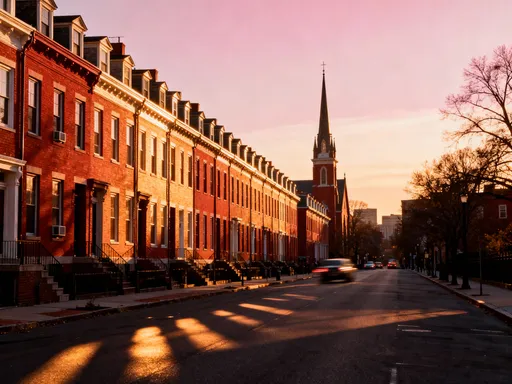
Outside the well-trodden tourist routes, Düsseldorf’s northern neighborhoods—Pempelfort, Derendorf, and Golzheim—reveal a more intimate side of the city’s architectural story. These areas are dominated by Wilhelminian-era apartment buildings, constructed in the late 19th and early 20th centuries during a period of rapid urban expansion. Characterized by their stately proportions, ornate stonework, and bay windows, these buildings exude a quiet elegance. Facades are adorned with floral reliefs, lion heads, and intricate moldings, while ground-floor entrances often feature stained glass and wrought-iron railings.
What makes these districts special is their sense of lived-in charm. Unlike perfectly restored historic centers, these streets show the gentle wear of time—faded paint, ivy creeping up walls, bicycles leaning against doorways. Yet, the architectural integrity remains intact, a testament to durable construction and community pride. For photographers, this means endless opportunities for detail shots: a carved balcony with flower boxes, a colorful tile staircase, a vintage doorbell with engraved initials. A macro lens can isolate these elements, turning them into standalone works of art.
Walking through these neighborhoods feels like a slow immersion in urban life. Children play in small parks, neighbors chat on benches, and café tables spill onto sidewalks. The pace is unhurried, allowing for patient observation—the kind of photography that values presence over productivity. Low-angle shots from sidewalk level emphasize the height and rhythm of the buildings, while reflections in puddles or windowpanes add creative layers. The challenge here is to photograph respectfully, avoiding intrusive close-ups of private residences. The goal is not to document individuals, but to capture the atmosphere of a neighborhood where architecture and community coexist in harmony.
Seasonal changes further enrich the visual narrative. In autumn, golden linden leaves blanket the streets; in winter, frost traces the edges of windowpanes; in spring, cherry blossoms frame the doorways. These natural elements interact with the built environment, creating fleeting moments of beauty that reward attentive photographers. The northern districts remind us that architecture is not just about monuments—it is also about the spaces where people live, love, and grow.
Final Reflections: Why Düsseldorf’s Architecture Tells a Deeper Story
Düsseldorf’s architectural landscape is more than a collection of buildings—it is a chronicle of resilience, reinvention, and balance. From the timber-framed houses of the Altstadt to the soaring glass towers of the MedienHafen, each structure contributes to a layered narrative that spans centuries. What makes this city exceptional is not the presence of old or new, but the way they coexist without conflict. There is no forced juxtaposition, no architectural battle—only a thoughtful dialogue between eras.
This harmony is not accidental. It is the result of deliberate urban planning, community engagement, and a deep respect for both heritage and innovation. Düsseldorf does not treat its past as a relic to be preserved behind glass, nor does it chase modernity at the expense of identity. Instead, it allows its architecture to evolve while remembering where it came from. The moss wall of Kö-Bogen, the iron trusses of Carlsplatz, the deconstructivist curves of Gehry’s buildings—all are testaments to a city that values creativity, sustainability, and human scale.
For travelers and photographers alike, Düsseldorf offers a powerful reminder: the best way to understand a city is to look closely. Not just at its famous landmarks, but at its doorways, its market stalls, its quiet side streets. The most compelling images often come not from the obvious vantage points, but from moments of patient observation—waiting for the right light, watching how people move through space, noticing the small details that tell larger stories.
So as you explore Düsseldorf, let your curiosity guide you. Walk beyond the guidebook recommendations. Pause in the shadows of a Wilhelminian balcony. Sit by the Rhine and watch the reflections change with the hour. Let the architecture speak, and listen with more than your eyes. In a world that often values speed over depth, Düsseldorf invites us to slow down, look deeper, and find beauty in the balance between old and new, stillness and motion, structure and soul.