You Won’t Believe What Hides Behind Hallstatt’s Postcard Views
Hallstatt, Austria, looks like it’s been plucked from a fairy tale—crystal lake, alpine peaks, pastel houses clinging to cliffs. But beyond the iconic postcard shot lies something deeper: distinct theme areas that shape the soul of this UNESCO village. I explored its lakeside serenity, historic salt mines, quiet cemeteries, and hidden trails, each revealing a different layer. This isn’t just a pretty stop—it’s a journey through time, nature, and culture, quietly unforgettable.
The Lakeside Scene: Where Beauty Meets Stillness
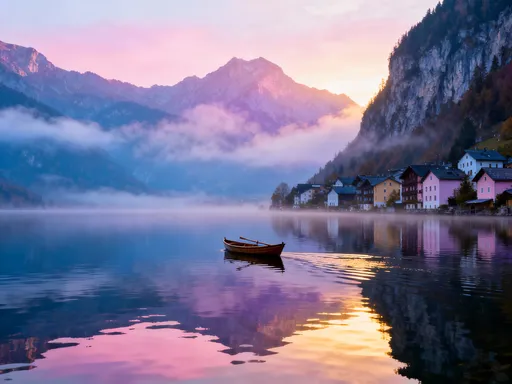
The shoreline of Hallstatt Lake is more than just a backdrop for photographs—it is a living, breathing space where nature and daily life intertwine in quiet harmony. Each morning, a delicate mist rises from the water’s surface, curling like smoke over the glassy expanse before dissolving into the crisp mountain air. Rowboats, painted in soft blues and greens, glide silently across the lake at dawn, their oars dipping without disturbance. The water itself reflects the sky and surrounding peaks with such clarity that it becomes difficult to distinguish where the world ends and its mirror image begins. This is not a place designed solely for tourists; it is also a sanctuary for locals who come to sit on weathered wooden benches, sip coffee from ceramic mugs, and watch the rhythm of the lake unfold.
Despite its fame, the lakeside retains an atmosphere of stillness, especially when visited early in the day. By 7:00 a.m., most tour groups have yet to arrive, and the village is still wrapped in a hush broken only by the soft lap of waves against stone docks and the distant chime of church bells. For those seeking a more intimate experience, renting a small rowboat offers a unique vantage point. Local operators near the main pier provide hourly rentals, allowing visitors to drift quietly past the iconic houses that seem to grow directly from the rock face. These homes, with their flower-laden balconies and steeply pitched roofs, are even more striking when seen from the water, their colors intensified by the morning light.
One of the most rewarding experiences is witnessing sunrise over the lake. Unlike many destinations where sunset draws the crowds, Hallstatt’s true magic happens in the early hours. As the sun climbs above the Dachstein peaks, it casts a golden glow across the water, illuminating the village in warm, soft tones. This is also the best time to access hidden viewpoints—small stone platforms and quiet footpaths that branch off from the main promenade. These paths, often overlooked, lead to quiet corners where the only sound is the rustle of leaves and the occasional call of a kingfisher diving for fish.
For those planning a visit, timing is essential. To avoid the midday influx of day-trippers arriving by ferry, aim to arrive between 6:30 and 8:00 a.m. Weekdays are significantly quieter than weekends, and late spring or early autumn offers milder weather and fewer crowds. While the lakeside is undeniably beautiful at any hour, it is in these quiet moments—when the world feels suspended between night and day—that Hallstatt reveals its most authentic self.
Underground Wonders: Journey into the Salt Mines
Beneath the serene beauty of Hallstatt lies a legacy carved in salt—one of the oldest continuously mined deposits in human history. The Salzwelten Hallstatt experience begins with a short cable car ride from the village, ascending through pine-covered slopes to the mountain entrance. From there, visitors descend into the earth along wooden walkways and ancient ladders, retracing the steps of miners who first began extracting salt over 7,000 years ago. This journey is not merely a tourist attraction; it is a passage through time, revealing how a single mineral shaped an entire civilization.
The mine tour is both educational and immersive. After donning protective helmets and jackets, guests walk through dimly lit tunnels where salt crystals glisten on the walls like frost. One of the most memorable moments is sliding down the original miner’s chutes—smooth wooden slides that were once the fastest way for workers to descend deeper into the mountain. These slides, still functional today, offer a brief, thrilling connection to the daily lives of those who labored underground for centuries. Along the way, guides explain the significance of salt in prehistoric trade, preservation, and even spiritual practices. Artifacts discovered in the mine, including textiles, tools, and human remains, have provided invaluable insights into early European life, particularly during the Iron Age.
Among the most profound stops is the underground salt lake, a still, mirror-like pool that reflects the dim light in an almost ethereal glow. Standing beside it, one feels a deep sense of stillness, as if time itself has slowed. Nearby, the Bone House within the mine complex houses centuries-old skeletal remains of miners, respectfully displayed as a tribute to those who worked in the depths. While this may sound unsettling, the atmosphere is one of reverence rather than fear, emphasizing the human cost and dedication behind the region’s prosperity.
The tour concludes at the Skywalk, a viewing platform perched over 1,000 meters above the valley. From here, the panorama is breathtaking: Hallstatt village appears like a miniature model nestled between the lake and the cliffs, surrounded by dense forest and towering peaks. This vantage point offers more than just a photo opportunity—it provides perspective. One can begin to understand how geography and resource shaped a community that thrived in isolation for millennia.
For visitors, preparation is key. Tickets should be booked in advance, especially during summer months, as access is limited to preserve the site. Comfortable, non-slip footwear is essential, as the paths can be damp and uneven. The experience is family-friendly, with interactive exhibits and storytelling elements that engage younger visitors. More than just a sightseeing stop, the salt mine offers a tangible connection to Hallstatt’s origins, reminding us that beneath every picturesque surface lies a story of labor, resilience, and human ingenuity.
The Dead Speak: Secrets of the Charnel House & Cemetery
Perched on a hillside above the village, the Catholic cemetery of Hallstatt holds a quiet power that lingers long after a visit. Accessible via a winding stone path lined with fir trees, this sacred space offers panoramic views of the lake and mountains, but its most striking feature lies within the small, unassuming chapel known as the Beinhaus, or Charnel House. Inside, over 1,200 painted skulls and bones are arranged with care, each marked with names, dates, and delicate floral motifs. Far from being a macabre display, this centuries-old tradition speaks to a deep respect for the dead and a practical response to limited burial space in the rocky terrain.
The practice began in the 18th century when overcrowding in the cemetery necessitated the exhumation of older remains to make room for new burials. Rather than discarding the bones, families chose to honor them by painting the skulls—often with the person’s name, lifespan, and symbolic designs like roses, daisies, or hearts. This act transformed what could have been a utilitarian process into a ritual of remembrance. Each skull becomes a personal tribute, a final expression of love and identity. Standing among them, one is struck not by fear, but by a profound sense of continuity—the understanding that life and death are part of the same quiet cycle.
The emotional impact of the Charnel House is subtle but lasting. Visitors often speak in hushed tones, not out of obligation, but from a natural sense of reverence. The space is small, intimate, and deeply human. It invites reflection not on mortality in a frightening sense, but on memory, legacy, and the passage of time. Outside, the cemetery itself is beautifully maintained, with weathered stone crosses, fresh flowers, and winding paths that invite slow, contemplative walks. Benches placed strategically offer moments of rest and reflection, facing the sweeping vista of Hallstatt Lake below.
For those planning to visit, certain etiquette should be observed. Photography inside the Beinhaus is permitted but should be done respectfully—no flash, no close-ups that feel intrusive. The best time to come is in the late morning or early afternoon on a weekday, when the site is less crowded. Visiting during quieter seasons, such as late autumn or early spring, enhances the meditative atmosphere. While the Charnel House may not appeal to every traveler, for those open to its message, it offers one of the most moving cultural experiences in the region—a reminder that beauty and solemnity can coexist, and that even in death, there is dignity and grace.
Old Town, New Rhythms: Walking the Village’s Themed Pathways
Hallstatt’s old town is a masterpiece of alpine charm, a compact maze of cobbled lanes, centuries-old buildings, and flower-draped facades that seem to defy gravity. With no cars allowed, the village moves at a pedestrian pace, where the sounds of footsteps, distant music, and soft conversation replace the hum of engines. This deliberate slowness enhances the experience, allowing visitors to absorb the details: the intricate wood carvings on doorframes, the scent of fresh bread from a corner bakery, the way sunlight filters through lace curtains in a ground-floor café.
The village can be naturally divided into several experiential zones, each with its own rhythm. The market square, centered around the Catholic Church of the Assumption, is the heart of daily life. Here, locals gather for morning coffee, tourists browse souvenir stalls, and seasonal events unfold—such as the Christmas market with its wooden huts glowing under strings of lights, or summer concerts held in the open square. Nearby, the Protestant church offers a quieter counterpoint, its simple stone exterior and peaceful garden providing a space for reflection away from the main flow of foot traffic.
The harbor area, where ferries arrive and depart, functions as the village’s pulse. This is where the energy shifts throughout the day—calm in the early hours, bustling by mid-morning, and gradually quieting as the last boats leave. Watching the rhythm of arrivals and departures offers a unique window into how Hallstatt balances tourism with daily life. Locals step off the ferry with grocery bags, children wave from the deck, and delivery workers unload supplies for the village’s shops and inns. It’s a reminder that behind the postcard image is a functioning community.
For a more authentic experience, visitors are encouraged to explore beyond the main promenade. Hidden courtyards, tucked between buildings, reveal old wells and ivy-covered walls. Artisan shops sell hand-painted ceramics, locally made salt candles, and woolen goods crafted in traditional patterns. Favorite local cafés, such as those tucked along the upper lanes, offer views of the lake without the crowds. One such spot, a family-run bakery near the edge of town, is known for its apple strudel and quiet outdoor seating—a perfect place to pause and simply watch the world go by. By walking slowly, turning down side paths, and engaging with shopkeepers, travelers can move beyond the surface and begin to feel the village’s living rhythm.
Nature’s Backstage: Hiking Trails That Reveal Hidden Hallstatt
Just beyond the village, the landscape opens into a network of hiking trails that climb into the Dachstein foothills, offering solitude, fresh air, and some of the most breathtaking views in the region. These paths are not merely routes to a destination; they are immersive experiences that connect visitors with the raw, untamed beauty that has shaped Hallstatt’s identity. Three particularly accessible trails—the Echern Valley path, the Lianeck Trail, and the route to the Five-Finger Lookout—each offer unique perspectives and varying levels of difficulty, making them suitable for families, solo hikers, and seasoned walkers alike.
The Echern Valley path begins just east of the village and follows a gentle stream through a shaded forest of beech and fir. Ideal for a relaxed morning walk, this trail is rich in birdlife—woodpeckers tap in the distance, and warblers flit among the branches. Wildflowers bloom in spring, carpeting the forest floor in violets, anemones, and primroses. The path eventually leads to a small alpine meadow where grazing sheep add a pastoral charm. This route is especially peaceful in the early hours, before the midday sun warms the valley.
The Lianeck Trail is slightly more challenging, ascending through rocky terrain and offering panoramic views of the lake and surrounding peaks. Marked with yellow signs, the trail is well-maintained and clearly signposted. Along the way, hikers pass remnants of old stone walls and wooden shelters used by shepherds in past centuries. The trail rewards effort with sweeping vistas, particularly at a natural overlook where the entire village of Hallstatt unfolds below, framed by water and mountain.
For those seeking a more dramatic experience, the Five-Finger Lookout—a steel platform extending over the cliffside—offers an exhilarating perspective. Reached via a moderate hike from the upper cable car station, the platform juts out over empty space, allowing visitors to stand above the valley with nothing but air beneath their feet. The view stretches for miles, encompassing glaciers, forests, and the winding course of the Traun River. While the structure is modern, its purpose is timeless: to inspire awe and a deep connection to the natural world.
Regardless of the chosen path, preparation is essential. Weather in the mountains can change rapidly, so layers, sturdy footwear, and a light rain jacket are recommended. Starting hikes early not only avoids the heat of midday but also the growing number of hikers drawn to these scenic routes. These trails are more than just physical activity—they are invitations to slow down, breathe deeply, and witness Hallstatt not as a curated image, but as a living landscape shaped by time, weather, and resilience.
Culture Beyond the Surface: Museums, Crafts, and Local Life
Despite its small size, Hallstatt is rich in cultural offerings that go far beyond its visual appeal. The Hallstatt Museum, housed in a historic building near the market square, is a treasure trove of prehistoric artifacts, including original tools, textiles, and skeletal remains from the salt mines. Its exhibits are thoughtfully curated, offering context for the village’s UNESCO designation and its role in early European civilization. Temporary exhibitions often focus on local traditions, such as folk music, textile weaving, or seasonal festivals, providing deeper insight into community life.
Equally compelling are the local craft workshops that dot the village. Artisans continue age-old traditions, creating hand-painted ceramics adorned with alpine motifs, candles made from locally harvested salt, and wooden carvings shaped from forest timber. Many of these workshops welcome visitors, offering demonstrations and the chance to purchase one-of-a-kind pieces. Supporting these makers is not only a way to bring home a meaningful souvenir but also a way to contribute to the sustainability of local culture.
The relationship between tourism and community life is a delicate balance. Hallstatt’s popularity has brought economic benefits, but also challenges—overcrowding, strain on infrastructure, and the risk of turning the village into a mere stage set. In response, local authorities have implemented measures such as limiting the number of day-trippers, promoting off-season visits, and encouraging overnight stays in nearby towns like Obertraun and Gosau. These efforts aim to preserve the authenticity of daily life while still welcoming visitors.
Conversations with shopkeepers and guides reveal a quiet pride in heritage, along with a desire for respectful tourism. Many express gratitude for guests who take the time to learn about the village’s history, engage in conversation, and support local businesses. For travelers, this means more than just passing through—it means seeing Hallstatt not as a destination to be checked off a list, but as a living, breathing community with stories worth hearing and traditions worth preserving.
Travel Smart: Choosing When, How, and Why to Visit
Given Hallstatt’s global fame, visiting thoughtfully is no longer optional—it is essential. The difference between a rushed, crowded experience and a meaningful connection often comes down to planning. The most important decision is how to arrive. While many visitors come by ferry from nearby towns like Obertraun or by bus from Attnang-Puchheim, arriving by train and then walking or taking a short boat ride offers a more seamless entry. The nearest major station is in Attnang-Puchheim, with direct connections from Vienna, Salzburg, and Linz. From there, a regional train to Hallstatt station, followed by a 15-minute ferry ride, provides a scenic and stress-free approach.
Accommodation is another key consideration. Staying overnight in Hallstatt itself offers the rare chance to experience the village in the quiet hours before dawn and after dusk. However, rooms are limited and book up quickly. Alternatives in Obertraun or Gosau provide comfortable lodging with easy ferry access, often at lower prices, and allow visitors to enjoy the lake views without the premium cost. These neighboring villages also offer a more relaxed pace and a chance to engage with a broader region.
Seasonal timing greatly influences the experience. Spring (April to June) brings fresh greenery, blooming flowers, and mild temperatures, with fewer crowds than summer. Summer (July to August) is vibrant but busy, ideal for families and those who enjoy festivals and outdoor concerts. Autumn (September to October) dazzles with golden larches and red maples, creating a photographer’s dream. Winter (November to March) transforms the landscape into a snow-covered wonderland, perfect for those seeking solitude and the magic of a quiet, frost-laden village.
Ultimately, Hallstatt is not a place to be consumed quickly. It is a destination to be felt, absorbed, and respected. By choosing to visit during off-peak hours, supporting local businesses, and taking time to explore beyond the postcard views, travelers can move beyond the surface and connect with the deeper layers that make Hallstatt not just beautiful, but unforgettable.
Hallstatt’s true magic isn’t in its perfection, but in its layers. Each theme area—lake, mine, cemetery, trail, village, culture, and mindful travel—adds depth to the picture. When we slow down, look closer, and choose awareness over convenience, we don’t just see Hallstatt. We feel it. And in that feeling, we find travel’s rarest gift: a place that stays with you, long after you’ve left.