You Won’t Believe These Secret Viewpoints in Bariloche
Nestled in Argentina’s Lake District, Bariloche is more than just chocolate and alpine charm—it’s a paradise of hidden viewpoints waiting to be discovered. I’ve explored every ridge and trail, and let me tell you, the real magic lies off the beaten path. From sunrise over Nahuel Huapi to panoramic alpine peaks, these spots offer soul-stirring beauty you won’t find on postcards. This is the Bariloche most travelers miss—raw, quiet, and absolutely breathtaking.
Why Viewpoints Define Bariloche’s Soul
Bariloche sits cradled within a dramatic landscape where emerald lakes meet snow-capped Andean peaks, and ancient forests climb steep slopes with quiet persistence. This unique geography makes elevated viewpoints not just scenic additions to a trip, but central to understanding the region’s essence. When you stand above the tree line and gaze across a mosaic of water, rock, and sky, you gain more than a photograph—you gain perspective. These vantage points offer emotional clarity, a sense of scale, and a rare stillness that lingers long after the journey ends.
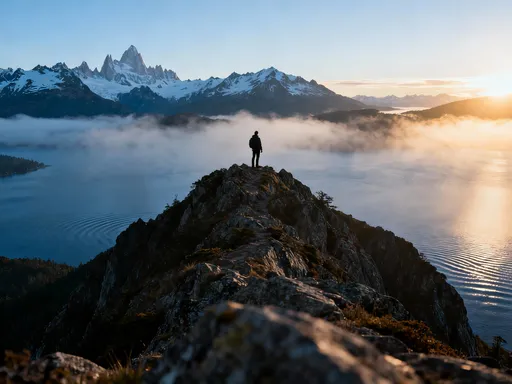
For many visitors, the mountains and lakes are seen from a distance—through car windows or from crowded decks. But when you reach a summit or pause on a secluded ridge, something shifts. The wind carries the scent of pine and cold water. The silence is deep enough to hear your own breath. In those moments, the vastness of Patagonia is no longer abstract; it becomes personal. I remember standing at dawn on a rocky outcrop above Lago Moreno, watching the first light spill across the water like liquid gold. In that instant, the landscape didn’t just impress me—it spoke to me.
Viewpoints also serve a practical role in orienting travelers within this complex terrain. From above, the relationships between lakes, valleys, and trails become clear. You begin to understand how Nahuel Huapi stretches like a sapphire ribbon through the foothills, or how the mountain ranges fold into one another like layers of a living map. This awareness enhances every part of the journey, whether you're hiking, boating, or simply driving through the region. The elevated view transforms confusion into comprehension, and curiosity into connection.
Moreover, these high places offer a rare gift in our fast-paced world: solitude. While popular spots draw crowds, many of Bariloche’s most rewarding lookouts remain untouched by mass tourism. They require a short hike, a local tip, or simply the courage to step away from the main path. But the reward is worth it—a moment of peace, a private sunrise, or the quiet thrill of discovering a place few have seen. In a world that often feels overexposed, these hidden viewpoints remind us that wonder still exists in the quiet corners.
Cerro Campanario: The Classic, But Not What You Think
No visit to Bariloche is complete without ascending Cerro Campanario, the city’s most iconic viewpoint. Rising 1,058 meters above sea level, this mountain offers one of the most celebrated panoramas in Patagonia. The journey begins with a short funicular ride—a charming red cable car that has carried visitors up the steep slope since the 1930s. As the car climbs, the city shrinks below, and the full expanse of Nahuel Huapi Lake unfolds in every direction.
At the summit, a 360-degree observation deck provides uninterrupted views of the surrounding lakes, islands, and peaks. On clear days, you can see as far as Isla Victoria, Llao Llao Peninsula, and the distant silhouette of Cerro Tronador. The sheer scale is humbling. But what many tourists don’t realize is that the real beauty of Cerro Campanario lies not in the main deck, but in the quiet paths that wind just beyond it. A short five-minute walk along the northern trail leads to a rocky ledge where the crowd thins and the view deepens—offering a more intimate encounter with the landscape.
Timing is everything here. Most visitors arrive in mid-morning, drawn by the convenience of tour buses and guided trips. But those who rise early are rewarded with a different experience entirely. At sunrise, the mountain is often wrapped in soft pink light, and the lake below mirrors the sky in perfect stillness. The air is crisp, the trails are empty, and the sense of discovery is palpable. This is when Cerro Campanario feels less like a tourist attraction and more like a sacred space.
The experience also changes dramatically with the seasons. In summer, the slopes are lush with green foliage, and the lakes shimmer under bright sunlight. In winter, the same landscape transforms into a monochrome dreamscape—snow blankets the peaks, and the frozen edges of the lake glitter under a pale sun. The funicular still operates, and the view becomes even more dramatic, with smoke curling from distant cabins and ski tracks etching the mountainsides. Whether you visit in January or July, Cerro Campanario delivers—but only if you’re willing to look beyond the obvious.
Cerro Otto: Sunset, Scenery, and a Surprise
If Cerro Campanario is Bariloche’s daytime crown, Cerro Otto is its evening jewel. Located just a short drive from the city center, this mountain is often overshadowed by its more famous neighbor—but those who make the trip are rewarded with one of the most breathtaking sunset experiences in the region. The journey begins with a modern cable car that glides smoothly over the treetops, offering glimpses of the valley below before depositing passengers at an observation deck perched 1,405 meters above sea level.
What sets Cerro Otto apart is its glass-floored viewing platform—a daring addition that lets visitors stand suspended above the void. For those with a steady heart, it offers a thrilling perspective straight down to the forest canopy. But even without the glass floor, the panoramic views are extraordinary. To the west, the sun dips behind the Andes, painting the sky in fiery hues of orange and purple. To the east, Nahuel Huapi stretches like a dark mirror, reflecting the last light of day. It’s a moment that feels both grand and deeply personal.
Unlike the busy mornings at Cerro Campanario, Cerro Otto comes alive in the late afternoon. The crowds are smaller, the mood is calmer, and there’s a sense of anticipation in the air. Many visitors bring cameras, but just as many sit in silence, wrapped in warm coats, simply watching the light change. The on-site restaurant adds to the experience, offering warm drinks and light refreshments with panoramic windows. It’s not about fine dining—it’s about comfort, warmth, and the luxury of staying awhile.
For the more adventurous, several hiking trails branch out from the summit. One leads to a secondary viewpoint with an unobstructed view of Isla Victoria, while another winds through a quiet pine forest before circling back. These paths are rarely crowded, making them ideal for those seeking solitude. In winter, the area becomes a hub for snowshoeing and cross-country skiing, with guided tours available for beginners. But even in summer, the mountain retains a peaceful energy—proof that popularity doesn’t have to mean overcrowding, as long as you choose the right time and mindset.
The Hidden Trail to Mirador los Arrayanes
One of Bariloche’s best-kept secrets lies along a quiet forest path leading to Mirador los Arrayanes—a secluded viewpoint overlooking a stretch of Lago Nahuel Huapi known for its crystal-clear waters and rare arrayán trees. Unlike the well-marked trails near the city center, this route begins at a modest trailhead accessible by a local road, often missed by rental car GPS systems. The hike itself is moderate—about 3.5 kilometers each way—but what it lacks in difficulty, it makes up for in atmosphere.
As you walk, the sounds of the city fade. The path winds through a Valdivian temperate forest, where ancient coihue and lenga trees arch overhead, their trunks wrapped in moss. Sunlight filters through the canopy in dappled patterns, and the air carries the earthy scent of damp soil and pine. Birdsong echoes in the distance—a black-faced ibis, perhaps, or the sharp call of a Magellanic woodpecker. There are no vendors here, no souvenir stands, no loudspeakers. Just the rhythm of your footsteps and the quiet pulse of the forest.
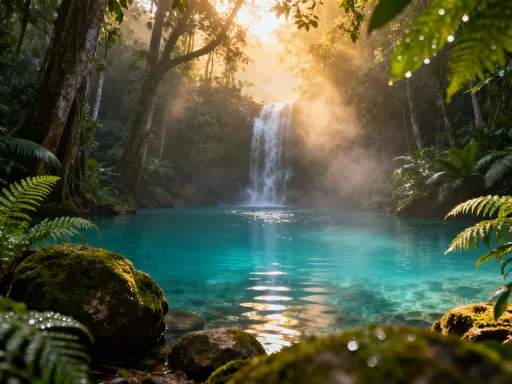
The first glimpse of the lake through the trees is unforgettable. Turquoise water stretches to the horizon, framed by distant peaks still dusted with snow. The viewpoint itself is simple—a wooden platform with a low railing—but its power lies in its simplicity. There are no crowds, no barriers, no distractions. You can sit on the edge, dangle your feet, and simply breathe. I visited at midday in early autumn, and for nearly twenty minutes, I was the only person there. In a world that rarely offers true quiet, that moment felt like a gift.
For those planning to visit, preparation is key. The trail can be muddy after rain, so waterproof hiking boots are recommended. A light backpack with water, snacks, and an extra layer is wise, as the temperature drops near the lake. While the path is well-marked, it’s not heavily trafficked, so downloading an offline map or asking for directions at a local outdoor shop is a good idea. And perhaps most importantly—leave no trace. This is a fragile ecosystem, and preserving its beauty means packing out everything you bring in. The reward is not just a view, but the knowledge that you’ve experienced something rare and real.
Lago Nahuel Huapi from the Water: A Different Perspective
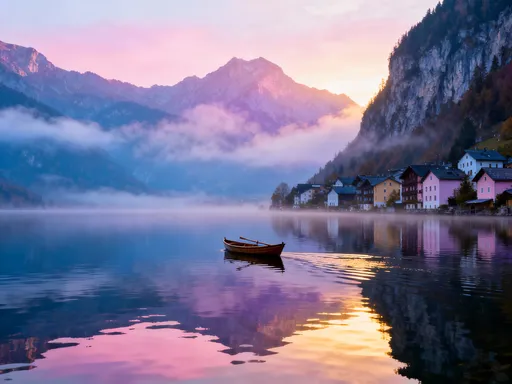
While mountain viewpoints offer grand panoramas, there’s another way to experience Bariloche’s beauty—one that begins at water level. Boat tours on Lago Nahuel Huapi provide a completely different perspective, revealing shoreline vistas, hidden coves, and forested inlets that are invisible from land. As the boat glides across the glassy surface, the mountains rise like cathedral walls on either side, their reflections trembling in the current. The scale feels more intimate, the colors more vivid, and the silence more profound.
Several routes operate seasonally, connecting Bariloche with islands and remote peninsulas. One popular option follows the eastern shore toward a quiet national park outpost, where passengers can disembark for a short walk through native forest. Another route loops around a cluster of small islands, offering views of private lakeside homes tucked into the trees. These tours are not just about sightseeing—they’re about rhythm. The gentle motion of the boat, the soft hum of the engine, the occasional call of a waterfowl—all contribute to a meditative pace that contrasts sharply with the rush of daily life.
From the water, the mountains look different. Their bases appear softer, their contours blurred by mist and distance. Light plays across the surface in ever-changing patterns, and the color of the lake shifts from deep blue to emerald green depending on the angle of the sun. On calm mornings, the reflections are so perfect they create the illusion of floating in the sky. It’s a perspective that reminds you how much beauty exists just below the surface—both literally and metaphorically.
Safety is well managed on these tours. All vessels are licensed and equipped with life jackets, and captains are experienced in navigating Patagonian waters. Tours typically run from late September to April, with reduced frequency in the shoulder months. For families and older travelers, the boat option is an excellent alternative to hiking, offering comfort and accessibility without sacrificing the sense of adventure. And for photographers, the low-angle light at dawn and dusk creates unmatched opportunities for capturing the region’s natural drama.
Local Secrets: Where Residents Go to Watch the World
Beyond the guidebooks and tour itineraries, Bariloche has a quieter side—one known only to those who live here. Through conversations with shop owners, park rangers, and neighbors, I’ve learned about a network of unofficial viewpoints that locals visit for peace, reflection, and connection. These aren’t marked on maps, and they rarely appear in travel blogs. But they are real, accessible, and deeply meaningful.
One such spot is a small hillside park on the city’s eastern edge, reachable by a quiet residential street. From a simple wooden bench, you can see the entire bay of Bariloche, with the lights of the town twinkling at dusk. Another favorite is a roadside pull-off along Route 40, where a dirt path leads to a rocky ledge overlooking a hidden lagoon. There are no facilities, no signs, no crowds—just a sense of discovery. These places aren’t hidden because they’re secret; they’re hidden because they don’t need to be advertised.
What makes these local viewpoints special is their authenticity. They aren’t designed for tourism—they exist because someone once paused there, looked out, and decided to return. They reflect a slower, more intentional way of experiencing the landscape. A mother brings her child to watch the sunrise. A couple shares a thermos of mate after a morning walk. An artist sketches the outline of distant peaks. These moments aren’t staged—they’re lived.
For visitors, accessing these spaces requires respect. These are not attractions to be conquered, but community spaces to be honored. That means staying on the path, keeping noise low, and leaving no trace. It also means asking questions—politely, genuinely—when you’re in local shops or cafés. More than once, a simple “Where do you go to watch the sunset?” has led to a warm conversation and a hand-drawn map on a napkin. In a world of curated experiences, these human connections are the most valuable souvenirs of all.
How to Experience Viewpoints Like a Pro: Timing, Gear, Mindset
Discovering Bariloche’s best viewpoints isn’t just about knowing where to go—it’s about knowing how to be there. The difference between a good experience and a transformative one often comes down to timing, preparation, and presence. The most beautiful view can feel ordinary if you’re cold, rushed, or distracted by a thousand photos. But when you arrive prepared and mindful, even a simple overlook can become a moment of lasting significance.
Start with timing. Light is everything. Sunrise and golden hour offer the most magical conditions, with soft, warm tones that bring out the textures of the landscape. Early mornings also mean fewer people, quieter trails, and a sense of being the first to witness the day. If you’re visiting in summer, aim to start hikes by 7:00 a.m. In winter, daylight is shorter, so plan accordingly. Midday can be bright and harsh for photography, but it’s ideal for boat tours or casual walks when the snow is stable.
Gear matters, but simplicity is key. Layered clothing is essential—temperatures can shift rapidly in the mountains. A moisture-wicking base layer, a warm mid-layer like fleece, and a windproof outer shell will keep you comfortable in most conditions. Sturdy, broken-in hiking boots provide support on uneven terrain. Don’t forget a hat, gloves, and sunglasses, even in summer. A small backpack with water, snacks, a first-aid kit, and a fully charged phone completes the essentials. For photographers, a lightweight tripod and polarizing filter can enhance water and sky shots, but remember: the best memories aren’t always the ones you capture—they’re the ones you feel.
Finally, cultivate the right mindset. Put the camera down. Breathe. Listen to the wind, the water, the silence between sounds. Let the view settle into your bones. Consider keeping a travel journal to record not just what you saw, but how it made you feel. These reflections often become more meaningful than any photograph. And above all, practice ethical travel—stay on marked trails, avoid disturbing wildlife, and leave every place as you found it. These landscapes are not ours to own, but to cherish and protect.
Conclusion
Bariloche’s viewpoints are more than scenic stops—they’re gateways to awe, connection, and personal reflection. By seeking out both iconic and hidden vantage points, travelers unlock a deeper, more authentic Patagonia. The real journey isn’t just about where you look, but how you see. Whether you’re standing atop a windswept peak, floating on a glassy lake, or sitting quietly on a local hillside, the landscape invites you to slow down, look closely, and remember what it means to be present. In a world that moves too fast, Bariloche offers something rare: the chance to truly see—and be seen by—the beauty of the natural world.